
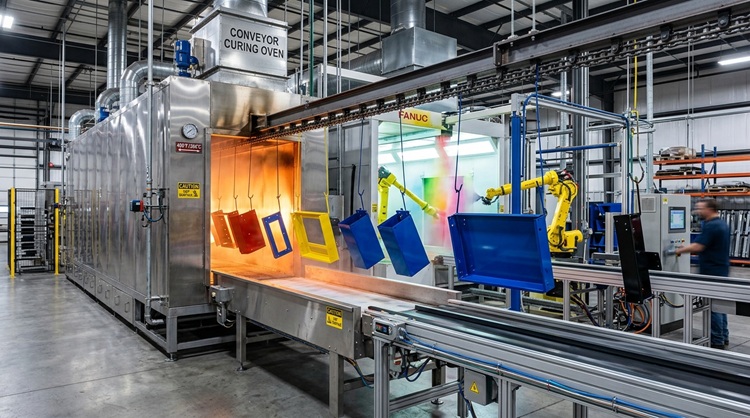
A powder coating operation depends on steady heat, correct part spacing, reliable airflow, and timing that fits the shop’s actual workload. Companies comparing powder coating equipment should treat oven selection as a production decision, not just a purchase based on size or price.
Matching It Prevents Expensive Bottlenecks in Your Daily Output
Bottlenecks often appear when an oven cannot keep pace with the rest of the finishing line. Parts may be sprayed and ready for curing, but if the oven is too small or too slow, racks sit waiting and the entire workflow loses momentum.
Reliant powder coating ovens are commonly evaluated around throughput because curing capacity directly affects how many parts a shop can finish in a normal shift. Uneven production flow also creates labor waste.
Workers may spend time waiting, rearranging racks, or reworking schedules instead of coating and moving parts efficiently. A properly matched oven helps the booth, staging area, and curing cycle work together instead of competing for time.
The Right Size Avoids Wasted Energy and High Utility Bills
Oversized ovens can create unnecessary energy costs when shops heat more space than they need. Extra cubic footage takes more fuel or electricity to reach temperature, especially when batches are small or inconsistent.
A Reliant industrial powder coating oven should be sized around real part volume, rack dimensions, and daily production patterns. Undersized ovens create a different kind of expense.
Small chambers may require too many batches, which increases heat cycles and labor hours. Better sizing keeps energy use tied to productive output rather than wasted air space or repeated curing runs.
It Ensures Consistent Cure Times for Strict Quality Control
Powder coating needs the right metal temperature for the correct amount of time. If parts do not reach cure temperature evenly, the finish may look acceptable at first but fail later through poor adhesion, dullness, chipping, or reduced durability. Consistent cure timing protects the coating’s performance after the product leaves the shop.
Quality control becomes harder when operators must guess how long parts need in the oven. Thick steel, aluminum, mixed part sizes, and dense loads can all affect heat absorption. Reliable powder coating equipment helps teams create repeatable curing procedures instead of adjusting every batch by trial and error.
Correct Capacity Keeps Your Finishing Line Moving Without Delays
Capacity is not only about how many parts fit inside the oven. Racks need enough clearance for airflow, safe handling, and proper part spacing. Cramming too many items into one batch can block heat movement and create uneven results.
Good capacity planning also considers how parts arrive from earlier stages. Washing, drying, masking, spraying, and loading all feed into the curing schedule. Shops looking at a Reliant powder coating oven for sale should compare oven dimensions with the way parts actually move through their building.
Scaling Oven Size to Your Parts Prevents Floor Space Constraints
Floor space can become a hidden cost in finishing operations. An oven that is too large may crowd staging areas, block material flow, or force awkward forklift movement. Equipment placement should support safe loading and unloading without turning the shop floor into a tight maze.
Part size matters just as much as building size. Long railings, panels, wheels, frames, furniture pieces, and fabricated metal parts may need special clearance. A Reliant powder coating equipment package can help align oven size, booth layout, and workflow so the system fits the space instead of fighting it.
It Helps You Accurately Meet Customer Lead Times and Deadlines
Customer deadlines depend on predictable production. If curing becomes the slowest step, delivery dates can slip even when spraying and preparation run smoothly. Matching the oven to production goals helps shops estimate output with more confidence.
Reliable scheduling also improves communication with customers. A shop that understands its true curing capacity can give better lead times, avoid overpromising, and plan rush orders more carefully. Stronger production control often leads to fewer late jobs and less pressure on the crew.
The Right Heat-up Speed Aligns Perfectly with Your Batch Timing
Heat-up speed affects how quickly the oven returns to production temperature after loading. Large parts, frequent door openings, and heavy racks can pull heat from the chamber. If recovery time is too slow, operators may lose valuable minutes across every batch. Faster recovery is useful only when it matches the production rhythm. A shop running steady batches needs an oven that maintains temperature without constant delays. Reliant powder coating equipment for sale may be reviewed by heat performance, chamber design, and airflow patterns because those details influence real curing time.
It Maximizes Your Equipment Roi by Avoiding Unneeded Capacity
Return on investment depends on buying equipment that earns its place in the workflow. Too much capacity can tie up money in size the shop rarely uses, while too little capacity limits growth and creates daily frustration. The best match supports current work while leaving practical room for future production needs.
Reliant Finishing Systems gives manufacturers and coating shops a way to evaluate powder coating equipment around part size, batch timing, heat performance, floor space, and production goals. Their Reliant powder coating equipment and oven options help businesses choose curing systems that support efficient output, consistent finishing quality, and smarter long-term equipment planning.